MathematicsGrades 1–4
Balance Scale
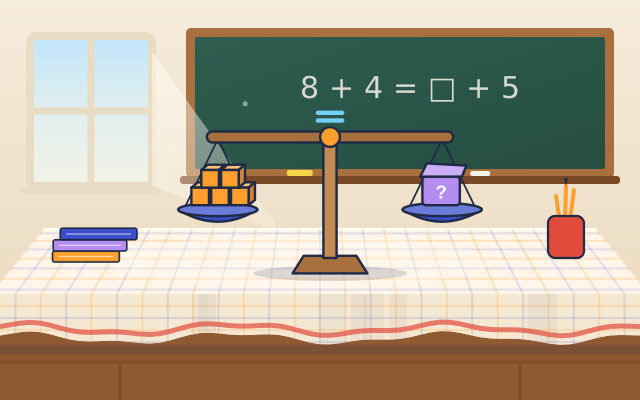
How many cubes are hiding in the box?
Put cubes in the mystery box and watch which way the balance tips. The equals sign says both sides match.
MAT.2.2.6
School Lab
Labs mapped to the learning outcomes of the grade 2 curriculum. Each one opens in its grade 2 version; the outcome codes are on every card.
Hi, I'm Cool! Let's make a guess first, then try it.
Labs
Every lab opens with one question: predict first, then experiment, then explain. Pick a grade and that grade's version opens.
4 labs · Grade 2All grades
MathematicsGrades 1–4
How many cubes are hiding in the box?
Put cubes in the mystery box and watch which way the balance tips. The equals sign says both sides match.
MAT.2.2.6
MathematicsGrades 2–4
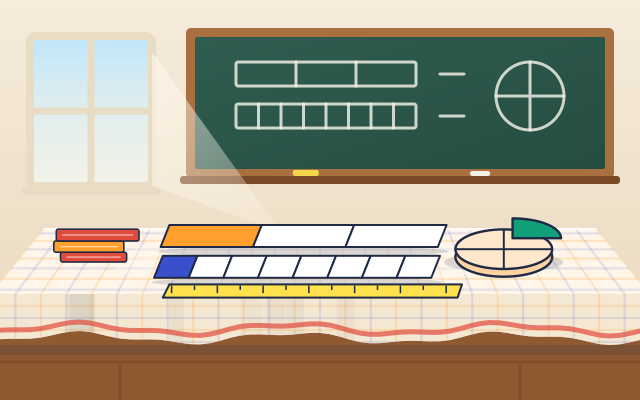
If you cut it into more pieces, do the pieces get bigger?
Split same-size strips into equal parts and stack the pieces. Which is bigger: a third or an eighth?
MAT.2.1.7
MathematicsGrades 2–4
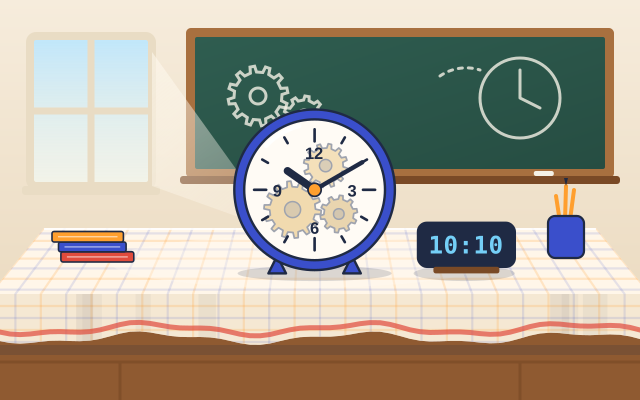
What does the hour hand do when the minute hand goes all the way round?
Turn the minute hand and watch the gears behind the clear back. How far does the hour hand move?
MAT.2.1.9
MathematicsGrades 1–4
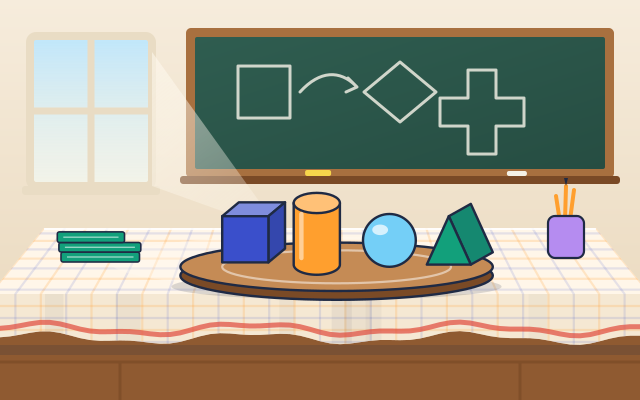
If you turn a square, is it still a square?
Turn and resize toy solids, count their faces or fold the net of a cube. What changes, and what stays the same?
MAT.2.3.1MAT.2.3.2MAT.2.3.4
How it works
The explorer cycle: children predict first, then try. The experiment only opens once a prediction is in, and a wrong guess is never punished, just explored.
Children meet the pieces and make a first move.
They show what they think; nobody says right or wrong.
They link the idea to something from home or school.
They choose a prediction; only then does the experiment open.
They try it, look closely and replay it as often as they like.
They learn the name for what just happened.
They test the idea in a new situation.
They look back at their prediction and collect a discovery card.
No timers, no rankings, no losing. If a prediction doesn't work out, Cool just asks: “Hmm, why do you think that happened?”
No accounts, names or photos. Language and sound settings and progress stay on the device.
Every lab comes with an activity for the teacher's desk, using things you already have in class.
For teachers
Every lab has a one-page printable teacher card: the lesson flow, a class prediction vote, discussion questions, misconceptions and an off-screen activity for the teacher's desk.
Open the lab full screen. At the predict step, children show their choice with their fingers and the class watches the result together.
Children can also explore on their own. The lab works in Turkish and English, and read-aloud uses the device's own voices.
Mapped to learning outcomes of Türkiye's national curriculum; not reviewed or approved by the Ministry of National Education (MEB) or its Board of Education (TTKB).
The labs don't ask for accounts, names or photos, and they send no data. Privacy: School Lab
School Lab is a personal project by Serdar Kul. The labs are free and ad-free.